How to Become a Freelance Web Designer With No Experience or Degree
This article may contain affiliate links, which means I could earn a commission if you buy through them, at no extra cost to you.
Today we are discussing how to become a freelance web designer with absolutely no experience or degree. These are the practical steps I went through, and which I would recommend to someone who does not have a computer science degree or anything related to tech. I became a fairly successful web designer myself.
Step 1: Pick a Web Design Software
Step number one to become a web designer is to pick a web design software that you want to learn. Pick one software and not eight different ones. It’s like saying you want to learn a language and then attempting German, French and Italian all at the same time. You would get overwhelmed and just quit. There are pretty significant differences between the web design software options out there, enough that learning several at once would likely confuse you. So pick one and learn it from the get go.
I’m going to create a video in the future explaining the main popular web design software that clients want, and how to pick the right one for you.
Step 2: Learn Web Design Software
Learn said software. You do not need to go to college or university for this. In fact I would highly recommend against it. Both of my brothers have computer science degrees, and what they do is code backend systems and create the tech. I help small business owners like photographers or mom and pop shops to get online with a website. These businesses tend to want websites they can actually use themselves and update later.
Why a Degree Isn’t Necessary
When you go to college you don’t learn one web design software, you learn the coding which creates things like these platforms. So it is generally unnecessary to go to college or university to serve the average small business owner. If you did get a comp sci degree, for example, you’d likely end up doing something quite different from freelance web design.
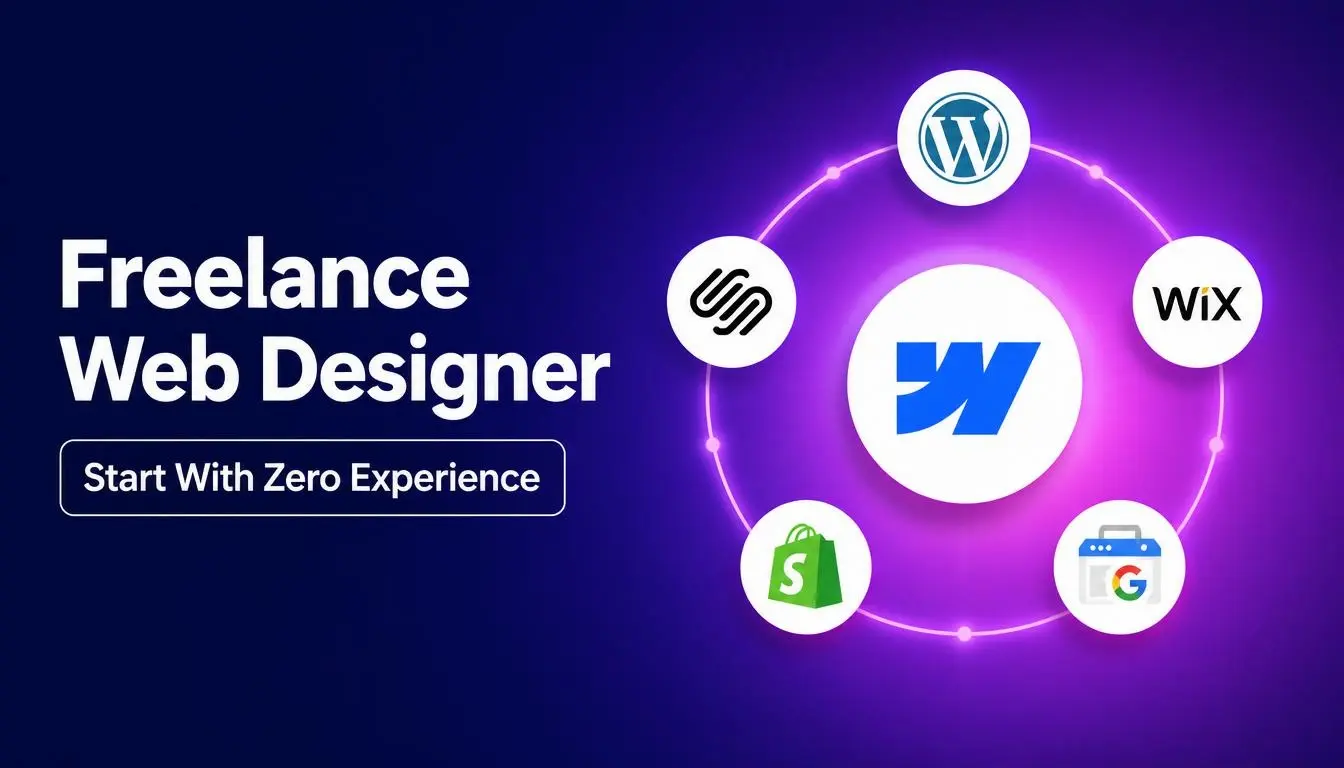
No matter which software you choose, there is a course that exists for it by now. WordPress, Squarespace, Wix, Shopify, Webflow, all the things. You can get paid and free courses on these tools which will give you what you need to know to be proficient in using them.
Step 3: Learn Web Design Best Practices
Web design best practices. You might have heard the term UI UX before, which means user interface, user experience. I personally dislike the term and I think it’s confusing for most people. What I like to say, which is kind of the same thing, is web design best practices, because I think it’s a lot clearer. Think of it like this: sometimes you go to a website and you can’t find anything that you’re looking for, or it takes a million clicks and annoying steps to do the thing that you want to do. That is because the website has bad UI UX, or in my own words it isn’t following web design best practices.
This doesn’t just relate to the functionality of a website, i.e. how hard or easy it is to use, but also to the design of the website. You can feel it when you walk into a luxury store versus a dollar store, it’s a different feeling. Certain elements of design, like the use of color and white space and fonts etc., give off a totally different vibe. So learning the best practices, not just of user experience and how the website functions, but also the beauty and the visual side of the website, is important too.
Step 4: Learn SEO Basics
Basic SEO versus advanced SEO, let’s have a quick discussion on that. Basic SEO is learning how to set all of the website settings correctly, naming your images, making strategic use of headings and content on the page, page descriptions and that sort of thing. Advanced SEO involves link building and long-form content creation over a longer period of time. This is typically a service that someone offers on a retainer, meaning that they do that work month to month. If you want to rank in a semi-competitive industry, this usually isn’t a one-and-done job. It’s something which either the business owner or a company they hire does over the course of months and years to get the website ranking and then keep it ranking.
I would worry about the SEO basics, and not about backlinking strategies or content creation, because that tends to be a different type of service. If you want to offer that down the road, knock yourself out, but for right now to build websites for clients you need to know the SEO basics.
Step 5: Build a Few Portfolio Sites
Step five is to build a few portfolio sites. These can be paid websites which a business owner has paid you to do, or you can do them for free. Actually building websites gives you practical use for all the tech that you learned in step two. You learn much more when you have to use the tech in a real project than when you just watch a tutorial. So I highly recommend building a few websites for other people.
This also helps with your confidence that you really can deliver the thing you want to offer, which is a huge mental hurdle that a lot of new web designers without experience or a degree get stuck at. They think, “I’ve never actually done this for someone before, so can I really offer this as a service?” Whether you do it for free or for pay is up to you, but building a few websites before you officially launch your business tends to be helpful.
Step 6: Pick a Way to Get Clients
Step number six is to pick a way to get clients. I could walk through the pros and cons of every client finding strategy out there, but I’ve done that many times and people still end up confused. So instead I created a quiz called “Which client finding method matches your personality type.” You can find it at pbcourses.com/quiz, and in about 60 seconds you’ll get a good idea of which strategy is likely to work best for you to bring in paid clients. It will give you the details that you need to know, and then you will have chosen your client finding strategy.
No Degree or Experience Needed
There are many people who started with no degree and no experience and became web designers. Before I became one, my only experience was that I had built a travel blog once and redesigned it a zillion times because I enjoyed doing it. I went on to build a successful career as a web designer. A computer science degree isn’t needed for this, and it would likely lead you into a different job anyway.
If you have no experience in this industry it’s fine, you can learn it. You can get experience from doing a few paid or free projects at the very beginning and then you’re ready to build your own web design business. For this particular job, a degree usually isn’t needed.