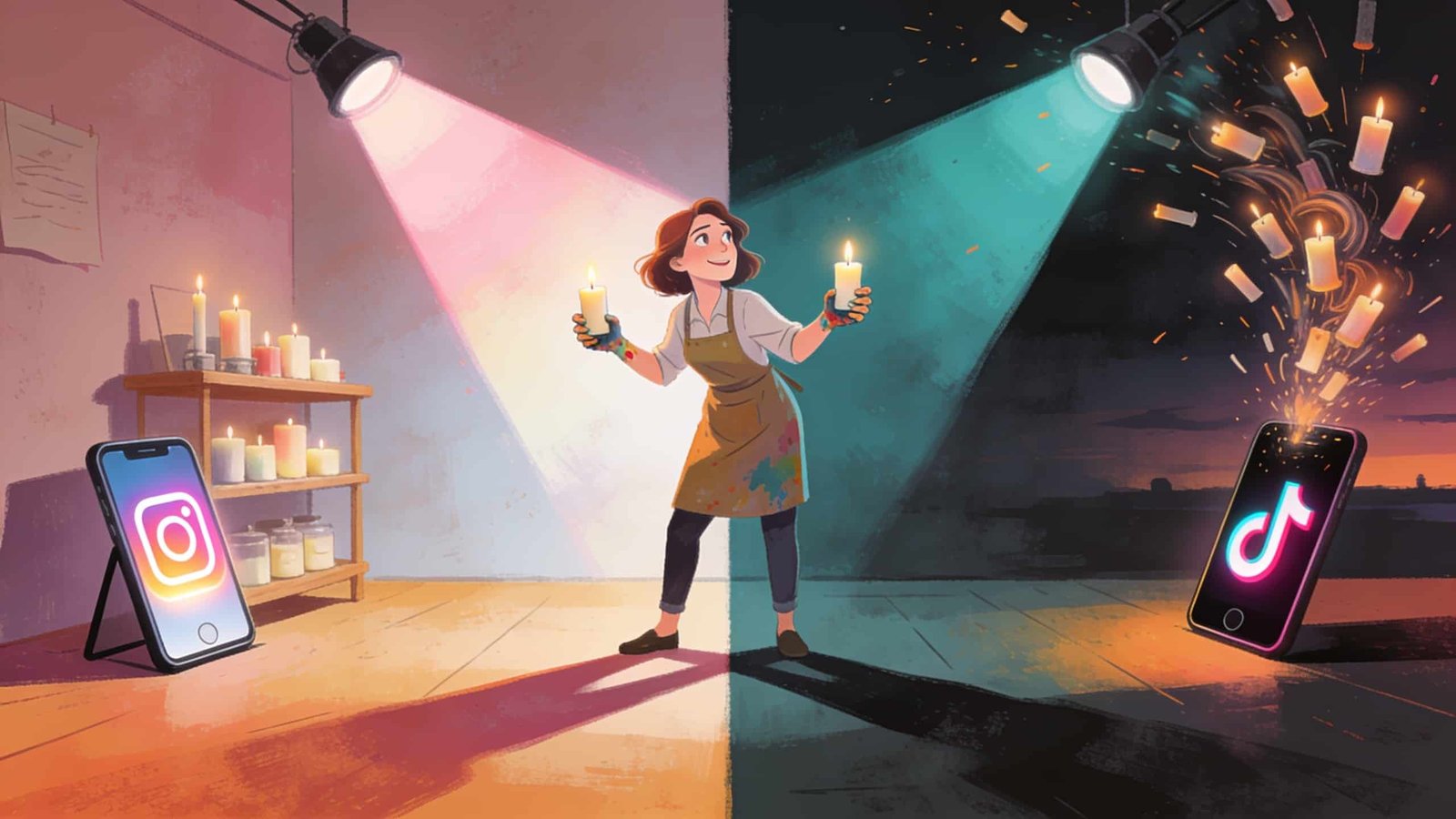
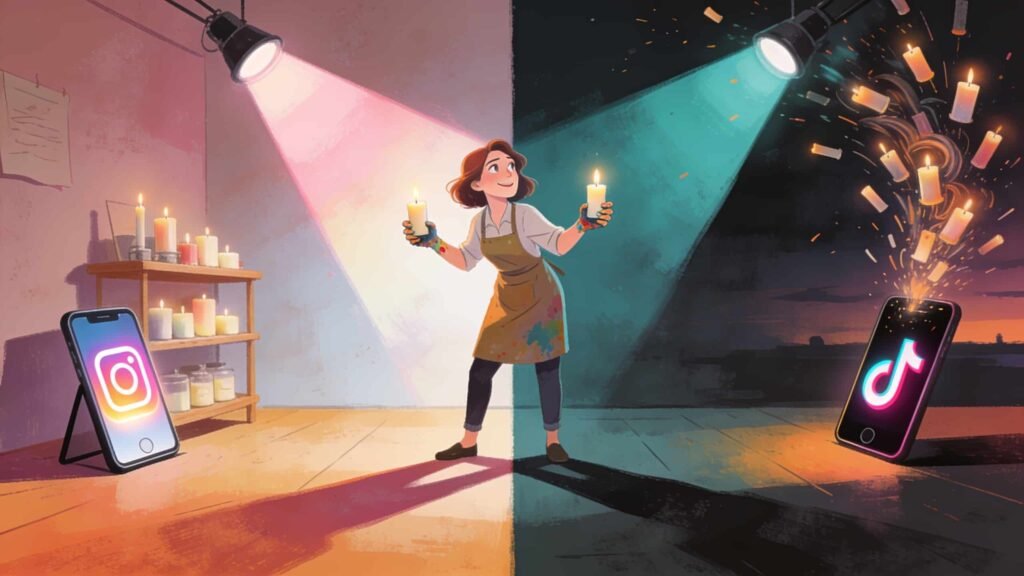
Last spring, a friend of mine who sells handmade candles messaged me at 11pm. She was freaking out. She had just spent three weeks setting up her Instagram Shop. Then, a random TikTok video she posted almost as a joke got her more orders in 48 hours than her Instagram store had done all month.
She wanted to know if she should just drop Instagram and go all in on TikTok Shop.
I have run small online stores on both platforms for a couple of years now. Mostly print on demand items and a few home goods. So I sat down with her, opened both dashboards side by side, and we went through everything. Fees, checkout, how easy it is for new sellers to get seen, and the customer support headaches too.
This article is that same conversation, cleaned up, for anyone trying to decide where to put their time in 2026.
The Short Answer (But Please Keep Reading)
If you are starting from zero and want fast sales, TikTok Shop is winning right now for most product types. This is true especially for anything visual, trendy, or cheap enough for a quick, no-thinking buy.
If you already have a loyal group of followers and sell higher priced or niche items, Instagram Shop still holds its own. It works well through DMs and Stories.
But “better” depends on what you sell and how much time you have to make content. Let me break it down.
What TikTok Shop Actually Feels Like to Use
The first thing that surprised me about TikTok Shop was how hard the app pushes product videos, even from small accounts with almost no followers. I posted a video showing a $12 phone stand from a small supplier. It was filmed on my phone with zero editing skill. It got 40,000 views in two days. Eleven people bought the item straight from that video.
That almost never happens on Instagram unless you already have a following, or you are paying for ads.
A few things that make TikTok Shop different:
- You can buy without leaving the app. No redirect, no separate website, no extra steps.
- The affiliate program. You can let other creators sell your product for you and pay them a small cut automatically. This is one of the biggest reasons sellers are moving here. You can explore this through the TikTok Shop Partner Center.
- Live shopping. TikTok LIVE selling is huge in beauty, fashion, and gadgets. I watched a seller sell 200 units of a skincare tool in one 90 minute live stream.
- New accounts have a real shot. A fresh account with good content can go viral fast. Instagram tends to favor accounts that already have followers and history.
The downside? The TikTok Shop Seller Center dashboard can feel clunky. Payouts sometimes take longer than promised. And customer disputes tend to favor the buyer. I once had a return dispute drag on for almost three weeks. I lost both the product and the money.
What Instagram Shop Still Does Well
Instagram Shop does not have the same explosive discovery that TikTok has. But it wins in trust and long term relationships.
If someone already follows your brand on Instagram, they are usually warmed up. They have seen your Reels, maybe your Stories polls, maybe a few regular posts. By the time they reach your shop tab, they are not a total stranger. They are closer to a repeat buyer.
A few things Instagram still does better:
- DMs sell really well. Some of my highest value sales came from someone messaging me a question before buying. Not from the shop tab itself.
- Better for higher priced items. Instagram followers seem more patient with a $60 to $150 product. TikTok buyers lean toward quick, cheap purchases under $30.
- A cleaner looking store. The shop grid looks more like a real storefront. If you care about how your brand looks, Instagram still wins here.
- Ties in with Meta ads. If you run Facebook and Instagram ads together, your shop connects easily with your ad account and past customer data, which makes it easier to bring people back. You can check the setup steps and rules in Meta’s Commerce Eligibility Requirements.
The catch is that free, unpaid reach on Instagram has gotten harder every year. Reels can still go viral, but it is far less predictable than TikTok. You usually need more time before the app starts showing your content to new people.
Fees: Where the Money Actually Goes
This part matters more than most new sellers realize, until they see their first payout report.
TikTok Shop usually takes a cut per sale, and the amount changes by product type. Sometimes TikTok also runs short term deals with lower fees to attract new sellers. On top of that, if you use the affiliate program, you also pay a commission to whichever creator sold your item for you.
Instagram Shop, through Meta’s checkout system, also takes a selling fee. And if you run ads to bring in traffic, which most sellers end up doing sooner or later, you need to count that ad spend as a separate cost.
My honest take after tracking both for a few months: TikTok Shop’s total cost per sale was a bit higher once I added in affiliate fees. But the number of sales made up for it easily. Instagram had a lower cost per sale, but it needed more upfront work in ads or in building content over time.
Before listing anything, it is worth a quick read through Meta’s Commerce Policies so you know what is allowed and what gets your listing removed.
Step by Step: How I Would Set Up Both in 2026
If you are starting from nothing, here is the order I would follow, based on what worked and what wasted my time.
1. Pick your first product with care. Something visual, easy to show in a 15 to 30 second video, and priced under $40 tends to do best on TikTok. Save higher priced or niche items for Instagram.
2. Set up TikTok Shop first. Go through the TikTok Shop Seller Center, verify your business, add your bank details, and list your product with a clean, well lit photo and a short, honest description. Do not skip the video upload option. It matters more than the photo.
3. Post content that feels real, not like an ad. Videos that look like someone genuinely using or reacting to the product beat anything that looks too polished. My worst performing videos were the ones I over edited.
4. Turn on the TikTok affiliate program early. Even a small cut, say 10 to 20 percent, can bring in creators who make free content for you. It is basically free marketing.
5. Build Instagram at the same time, just slower. Set up the Shop tab, tag products in your Reels and posts, and use Stories with polls or questions to build a connection before pushing hard on sales.
6. Use Instagram to keep people, TikTok to find them. This is the split that worked best for me. New buyers find the product on TikTok. Some of them then follow the Instagram account for restocks or updates, and buy again there.
Mistakes I Made (So You Do Not Have To)
- Ignoring TikTok comments. People ask questions in the comments before they buy. If you do not reply within a few hours, you lose some of those sales.
- Mixing up views and sales. I assumed more views meant more sales. It does not. TikTok can give you huge reach with weak sales if the product does not fit the platform well.
- Pricing too low to look competitive. I cut my prices too thin trying to compete on TikTok, then could not cover the affiliate cuts and shipping. Price for your real costs, not for a race to the bottom.
- Forgetting about Instagram Stories. Regular feed posts get less attention these days. Stories, especially ones with polls or question stickers, quietly brought in a good chunk of my Instagram sales.
- Treating both platforms the same. Content that works on TikTok often falls flat on Instagram, and the other way around. Posting the exact same video everywhere is lazy, and people notice.
So Which One Should You Actually Pick?
If you had to pick just one, and you are brand new with no audience yet, TikTok Shop is the easier place to start in 2026. Its discovery system does a lot of the heavy lifting that would otherwise take months to build on your own. You can read more about how the platform works on TikTok Shop’s Wikipedia page if you want the bigger picture.
But if you already have an Instagram following, even a small one, do not drop it. Run both. Let TikTok bring in new eyes, and let Instagram turn some of those first time buyers into repeat customers. Just make sure your products follow the rules laid out in Meta’s Offers and Commerce policy guidelines so you do not lose your listings later.
My friend with the candle business ended up doing exactly that. She kept posting on both platforms, leaned harder into TikTok for new product launches, and used Instagram Stories to keep her regular customers updated on restocks. Six months later, both platforms were pulling their weight, just in different ways.
There is no single winner here. There is just the platform that fits your product, your content style, and how much time you are willing to give it each week.