My cousin called me last week. She was in a panic. Her old iPhone battery was dying by 2 PM. The screen had a crack on the corner. She needed a new phone before a work trip.
“Just tell me which one to buy,” she said. “iPhone or Samsung. I don’t want to think about it anymore.”
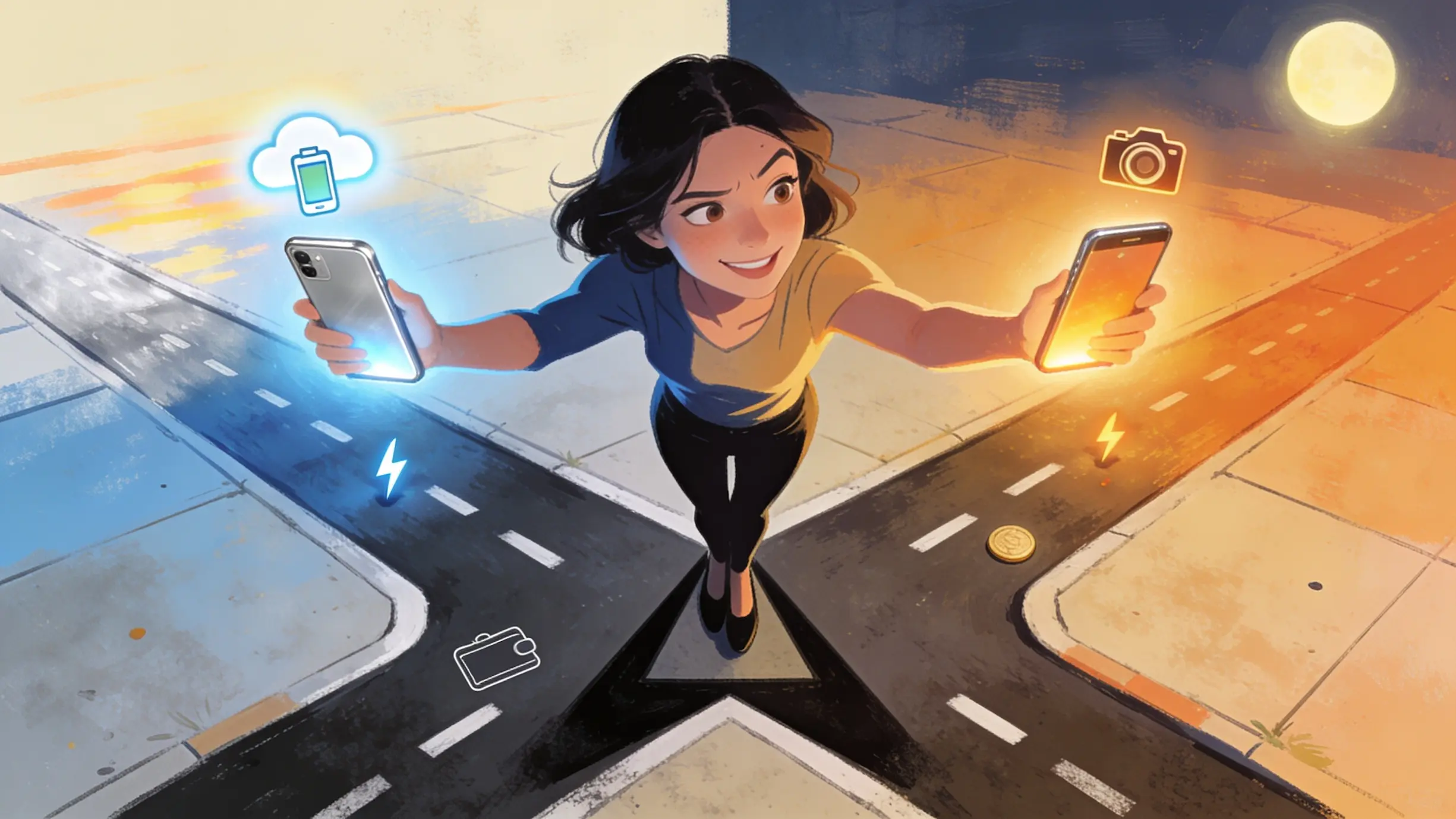
That’s the problem in 2026. There are so many good phones now. That makes the choice harder, not easier. So I used both the iPhone 17 and the Galaxy S26 for a few weeks. I switched between them every day. Here is everything I noticed. Real experience, not just spec sheets.
Why I compared these two phones
I switch between iPhone and Android a lot. Every year, I tell myself, “This time I will stick with one phone.” It never happens.
This year felt different. The iPhone 17 and Galaxy S26 came out close to each other. So comparing them made sense.
Price: the first thing that matters
Let’s start with the numbers.
- iPhone 17 starts at $799 (256GB storage)
- Galaxy S26 starts at $899
That $100 gap surprised me. Samsung raised its price this year. So Samsung is not the “cheaper” choice anymore. The iPhone is actually cheaper at the base price. That feels new.
Also, both phones dropped the 128GB storage option. So you now pay more just to get the starting model. (You can see the full spec breakdown of every iPhone 17 model here if you want to compare the Pro and Air versions too.)
My honest advice: check trade-in deals before you look at the full price. I got my cousin’s Galaxy S26 for $380 off using a trade-in offer. That changed the whole price comparison.
Financing: how people actually pay for these phones
Most people don’t pay $800 or $900 all at once. So let’s talk about financing.
- Apple Card Monthly Installments lets you pay for the iPhone 17 in parts over 24 months, with 0% interest.
- Samsung Financing (through Affirm or Samsung Credit) works the same way for the Galaxy S26.
- Carriers like Verizon, AT&T, and T-Mobile also offer 0% payment plans. Many people choose this option, but it locks you to that carrier.
If you plan to pay in installments, a 0% plan from the phone maker or carrier is usually better than a credit card or loan with interest. Just check the rules for early payoff before you sign up.
Phone insurance: is it worth it?
I used to skip phone insurance. Then I cracked my Galaxy S22 screen two weeks after buying it. I paid $280 to fix it. Now I never skip insurance.
- AppleCare+ for iPhone 17 costs about $9.99 a month. It covers accidental damage. Screen repair costs $29 with this plan.
- Samsung Care+ for Galaxy S26 costs a similar amount. It covers cracked screens, water damage, and other issues.
- Third-party insurance (like Asurion, through your carrier) is often cheaper each month, but the deductible is usually higher.
My simple rule: if you have broken a screen before, get the protection plan. If you haven’t, and you use a good case, you can probably skip it.
Best credit cards to buy these phones
Since you’re spending $800 or more, use a card that gives something back.
- Some cards give 5% cashback on electronics during certain months. This can save you real money on a $899 phone.
- Some credit cards include free phone protection if you pay your phone bill with that card. This might mean you don’t need AppleCare+ or Samsung Care+ at all.
- If you use Apple Card financing, you already earn cashback automatically.
Before you buy insurance, check if your credit card already covers phone damage. A lot of people pay twice for the same protection. Sites like NerdWallet and The Points Guy keep updated lists of which cards include cell phone protection as a built-in perk.
Camera: how the two phones feel different in real life
This is what most people care about. And this is also where “specs” can be misleading. (You can check the official Galaxy S26 series page for Samsung’s own camera claims, though real-world results always vary a bit from marketing photos.)
iPhone 17 has a 48MP Dual Fusion camera and a new Center Stage front camera. In daily use:
- Photos look the same, every time. Not flashy, just accurate.
- Skin tones look natural. This matters if you take a lot of family photos, like me.
- Low light photos are good, but not perfect. Indoor night photos can look a bit soft.
- The front camera automatically zooms out when more people jump into a selfie. This saved a group photo at a birthday dinner.
Galaxy S26 has a triple camera setup with a telephoto lens, plus a bigger 4,300mAh battery. In daily use:
- Zoom is much better on the Galaxy. My 3x zoom shots were sharper than the iPhone’s.
- Colors look more vivid straight out of the camera. Some people love this look. Some think it’s too much.
- Night photos take a bit longer to process, but they keep more detail in the dark areas.
- The Nightography Video feature made a real difference filming my nephew’s soccer game under stadium lights.
If you post photos straight to Instagram with no editing, you’ll probably like the Galaxy’s bold colors more. If you edit photos in an app like Lightroom, the iPhone’s flatter colors give you more control.
Battery: bigger difference than the spec sheet shows
On paper (according to GSMArena’s full spec sheet):
- iPhone 17: 3,692mAh
- Galaxy S26: 4,300mAh
That’s about 16% more battery on the Galaxy. And I felt the difference in daily use.
On a normal day (email, Slack, YouTube, Instagram, GPS while driving), my iPhone 17 dropped to 20% by 9:30 PM. The Galaxy S26 was still at 30% at the same time.
But charging speed tells a different story. The iPhone 17 reaches 50% in about 20 minutes. The Galaxy S26 charges slower with its 25W wired charging. I timed it once while making coffee. My coffee finished before the Galaxy hit 40%, but the iPhone had already passed 50%.
So here’s the trade-off: the Galaxy gives you more battery to use, but the iPhone charges faster. If you charge overnight and don’t think about it, the Galaxy’s bigger battery helps you. If you only have 10 to 15 minutes to charge before running out the door (like me, every morning), the iPhone’s fast charging matters more.
A mistake I made (don’t repeat it)
When I first got the Galaxy S26, I thought “20W wireless charging” meant it would charge fast on any wireless pad. It doesn’t work that way. I left it on a cheap wireless charger overnight and it was only at 78% in the morning. Most cheap wireless chargers don’t reach the phone’s full charging speed. You need Samsung’s own certified charger for that.
Lesson: if fast wireless charging matters to you, buy the charger made for your specific phone. Don’t use a random one you already own.
Resale value: which phone holds its price better
This matters if you like to upgrade every year or two.
- iPhones usually keep more resale value. After two years, an iPhone often keeps 50 to 60% of its price. Samsung phones usually keep 35 to 45%.
- Trading in through Apple, Samsung, or your carrier is easy, but selling privately (on sites like Swappa or Gazelle) can get you more cash if you’re patient.
- Keep the original box, use a screen protector from day one, and always use a case. This helps protect resale value on both phones.
If resale value matters to you, the iPhone 17 is the safer choice long-term, even though it costs less upfront.
Step-by-step: how to choose between these two phones
- Think about your storage habits first. If you always run out of space, don’t worry about price. Just pick your favorite phone and get at least 256GB. Both phones start there anyway.
- Think about how you take photos. Want bold, ready-to-post colors? Choose the Galaxy S26. Want more natural colors to edit later? Choose the iPhone 17.
- Think about your charging habits. Charge overnight? Galaxy S26’s bigger battery helps you. Only have a few minutes to charge during the day? iPhone 17 charges faster.
- Check trade-in deals before comparing prices. Both Apple and Samsung run trade-in offers often. This can change which phone is actually cheaper for you.
- Try both phones in the store for five minutes. Hold both. Take a photo of the same object with each one. Compare them side by side. Most people skip this step, but it really helps.
Common mistakes to avoid
- Choosing a phone based on last year’s reputation, not this year’s real changes. Samsung’s price increase surprised a lot of people.
- Thinking more megapixels means better photos. The Galaxy’s camera numbers look bigger on paper, but the iPhone’s photo processing often matters more.
- Ignoring your other devices. If you already use AirPods, a Mac, or an Apple Watch, switching to Samsung means losing some small conveniences you use every day.
- Not thinking about how much storage you actually need. Neither phone offers a cheap, low-storage option anymore, so plan ahead.
So which phone did my cousin buy?
She bought the Galaxy S26. Not because it’s “better,” but because she takes a lot of outdoor photos with her kids, wanted the zoom for soccer games, and always charges her phone overnight. It matched how she actually uses her phone.
If she used AirPods and an Apple Watch every day, or only had a few minutes to charge each morning, I would have told her to get the iPhone 17 instead.
Neither phone is a bad choice in 2026. They are just built for different habits. The “best” phone is really just the one that fits how you use it, not the one that wins on paper.